France vs Germany
France leads on 1 of 6 metrics, Germany on 5. Here's the full side-by-side breakdown.
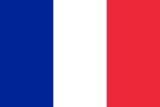

France and Germany are the twin engines of the European Union — once bitter enemies across three wars in seventy years, now the closest of partners whose cooperation underpins the entire European project. No two countries have done more to shape modern Europe.
France vs Germany: the verdict
Germany is the more populous of the two, home to 83.49 million people — about 1.2× the population of France (68.72 million).
On the economy, Germany has the larger nominal GDP at $5.05T. But measured per person, Germany comes out ahead on GDP per capita ($60,496), a better proxy for average living standards.
Geographically, France is the larger country, spanning 551,695 km².
Germany records the higher Human Development Index (0.959), reflecting stronger combined outcomes in health, education and income (source: UNDP).
Overall, Germany leads on more headline metrics in this comparison, though "which country is better" depends entirely on which measures matter to you.
Full breakdown
 France
 FranceFrance
Context & history
Germany is Europe's largest economy and its industrial powerhouse, built on world-famous engineering, manufacturing and exports. France is not far behind, with a more balanced economy spanning aerospace, luxury goods, agriculture, nuclear energy and services, plus the larger territory and armed forces of the two.
Their post-war reconciliation, sealed by the 1963 Élysée Treaty, transformed centuries of enmity into the axis around which the EU turns. When Paris and Berlin agree, Europe usually moves; when they disagree — over budgets, defence or energy — the whole bloc tends to stall.
Who would win?
Who would win? Germany leads on economic size and population; France leads on land area, military independence (it is the EU's only nuclear power) and diplomatic reach as a permanent UN Security Council member. On living standards the two are almost indistinguishable — fitting for partners so evenly matched.
Government & politics
FranceFrance
France has a semi-presidential system that splits executive power between a directly elected President and a Prime Minister. The President is unusually powerful for a head of state — commanding the military, directing foreign policy and appointing the PM — while the Prime Minister runs day-to-day government and must retain the confidence of the National Assembly. When the President and the Assembly majority are from opposing camps, France enters 'cohabitation,' with the two executives forced to share power.
Germany
Germany is a federal parliamentary republic. The President is a ceremonial head of state, while the Chancellor is the powerful head of government, elected by and answerable to the Bundestag. Germany's system is known for the 'constructive vote of no confidence' — parliament can only remove a Chancellor by simultaneously electing a replacement, which produces unusually stable governments. The powerful Federal Constitutional Court guards the constitution (the Basic Law), and the 16 states (Länder) hold substantial powers.
Travel & practical
FranceSome links are affiliate links — we may earn a commission at no cost to you.
Frequently asked questions
Which country has a higher GDP, France or Germany?
Germany has the higher nominal GDP at $5.05T, compared with $3.37T for France (World Bank).
Which country has a larger population, France or Germany?
Germany has the larger population with 83,491,249 people, versus 68,720,337 for France.
Which is larger in area, France or Germany?
France is larger, covering 551,695 km² compared with 357,114 km² for Germany.
Test your geography
Think you know your countries? Put it to the test with a quick game.