Argentina vs Brazil
Argentina leads on 2 of 6 metrics, Brazil on 4. Here's the full side-by-side breakdown.
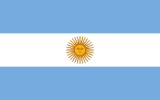
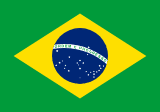
Brazil and Argentina are South America's two giants and its fiercest rivals — a rivalry felt most intensely on the football pitch, where matches between them are among the most watched fixtures on the planet, but which extends into economics, culture and regional leadership.
Argentina vs Brazil: the verdict
Brazil is the more populous of the two, home to 212.81 million people — about 4.6× the population of Argentina (45.85 million).
On the economy, Brazil has the larger nominal GDP at $2.28T. But measured per person, Argentina comes out ahead on GDP per capita ($14,898), a better proxy for average living standards.
Geographically, Brazil is the larger country, spanning 8,515,767 km².
Argentina records the higher Human Development Index (0.865), reflecting stronger combined outcomes in health, education and income (source: UNDP).
Overall, Brazil leads on more headline metrics in this comparison, though "which country is better" depends entirely on which measures matter to you.
Full breakdown
 Argentina
 ArgentinaArgentina
Context & history
Brazil is the larger of the two by almost every measure: population, land area and economic output, ranking among the world's ten biggest economies with a diverse base in agriculture, mining, energy and manufacturing. Argentina is smaller but historically wealthy, with rich farmland, an educated population and one of the region's higher levels of human development — though it has been dogged by recurring economic crises, inflation and debt.
Both anchor the Mercosur trade bloc and both carry outsized cultural weight, from Brazilian music and carnival to Argentine literature, wine and tango. Their football rivalry — Pelé versus Maradona, and later the age of Messi — has only sharpened the sense of two proud nations measuring themselves against each other.
Who would win?
Who would win? On sheer scale Brazil dominates — bigger economy, bigger population, bigger territory. Argentina counters with a higher GDP per capita in good years and a marginally higher human development score. On the football field, of course, all bets are off.
Government & politics
ArgentinaArgentina
Argentina is a federal presidential republic. The President is both head of state and head of government, directly elected and serving as commander of the armed forces. Power is divided among the executive, a bicameral National Congress and an independent judiciary, across 23 provinces plus the autonomous city of Buenos Aires.
Brazil
Brazil is a federal presidential republic modelled partly on the United States. The President is both head of state and head of government, directly elected and serving as commander of the armed forces. Power is divided among the executive, a bicameral National Congress and an independent judiciary led by the Supreme Federal Court. Brazil's many political parties mean presidents must build broad coalitions in Congress to govern.
Travel & practical
ArgentinaSome links are affiliate links — we may earn a commission at no cost to you.
Frequently asked questions
Which country has a higher GDP, Argentina or Brazil?
Brazil has the higher nominal GDP at $2.28T, compared with $683.1B for Argentina (World Bank).
Which country has a larger population, Argentina or Brazil?
Brazil has the larger population with 212,812,405 people, versus 45,851,378 for Argentina.
Which is larger in area, Argentina or Brazil?
Brazil is larger, covering 8,515,767 km² compared with 2,780,400 km² for Argentina.
Test your geography
Think you know your countries? Put it to the test with a quick game.