China vs Russia
China leads on 3 of 6 metrics, Russia on 3. Here's the full side-by-side breakdown.
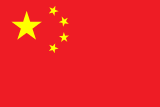
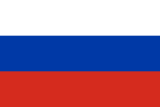
China and Russia are two of the world's most consequential powers and, increasingly, strategic partners aligned against the influence of the United States and its allies. One is a rising economic superpower; the other, the largest country on Earth by land and a nuclear heavyweight.
China vs Russia: the verdict
China is the more populous of the two, home to 1.41 billion people — about 9.8× the population of Russia (143.51 million).
On the economy, China has the larger nominal GDP at $19.5T. But measured per person, Russia comes out ahead on GDP per capita ($17,847), a better proxy for average living standards.
Geographically, Russia is the larger country, spanning 17,098,242 km².
Russia records the higher Human Development Index (0.832), reflecting stronger combined outcomes in health, education and income (source: UNDP).
Overall the two are evenly matched across these headline metrics — the "winner" depends on which measures matter most to you.
Full breakdown
 China
China ChinaChina
Context & history
Russia dwarfs China — and every other country — in sheer territory, spanning eleven time zones from Europe to the Pacific. But the balance of power between them has flipped over the past few decades. China's economy is now many times larger than Russia's and far more diversified, while Russia leans heavily on exports of oil, gas and other raw materials, much of which now flows east to China.
Once Cold War rivals who nearly went to war in the 1960s, the two have drawn closer in recent years, deepening trade, energy and military ties. Yet it is an unequal partnership: China is increasingly the senior partner economically, and their long shared border and competing interests in Central Asia keep an undercurrent of rivalry alive beneath the cooperation.
Who would win?
Who would win? Russia leads on land area, nuclear stockpile and raw resource wealth. China leads decisively on economic size, population, manufacturing and technology. In a long contest of national power, China's economic weight increasingly tips the scales — which is why many analysts see Russia as the junior partner in their alignment.
Government & politics
ChinaChina
China is a one-party state led by the Communist Party of China (CPC). Formal state institutions — the presidency, the Premier and the National People's Congress — operate under the direction of the Party. Ultimate power rests with the Party's General Secretary, who typically also holds the state presidency and chairs the Central Military Commission, concentrating Party, state and military authority in one person. The National People's Congress is the constitutional legislature but functions largely to ratify Party decisions rather than to check them.
Russia
On paper Russia is a federal semi-presidential republic, but in practice power is heavily concentrated in the presidency. The President controls the security services, the military and foreign policy, and dominates a Prime Minister who chiefly manages the economy. The State Duma and the courts exercise limited independent check on executive power. Constitutional changes in 2020 further strengthened and extended the presidency.
Travel & practical
ChinaSome links are affiliate links — we may earn a commission at no cost to you.
Frequently asked questions
Which country has a higher GDP, China or Russia?
China has the higher nominal GDP at $19.5T, compared with $2.56T for Russia (World Bank).
Which country has a larger population, China or Russia?
China has the larger population with 1,406,585,000 people, versus 143,513,328 for Russia.
Which is larger in area, China or Russia?
Russia is larger, covering 17,098,242 km² compared with 9,706,961 km² for China.
Test your geography
Think you know your countries? Put it to the test with a quick game.