Saudi Arabia vs United Arab Emirates
Saudi Arabia leads on 3 of 6 metrics, United Arab Emirates on 3. Here's the full side-by-side breakdown.
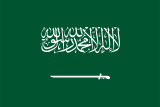

Saudi Arabia and the United Arab Emirates are the Gulf's two most powerful states — close allies, occasional competitors, and both racing to reinvent themselves for a world that will one day move beyond oil.
Saudi Arabia vs United Arab Emirates: the verdict
Saudi Arabia is the more populous of the two, home to 36.97 million people — about 3.2× the population of United Arab Emirates (11.51 million).
On the economy, Saudi Arabia has the larger nominal GDP at $1.28T. But measured per person, United Arab Emirates comes out ahead on GDP per capita ($47,973), a better proxy for average living standards.
Geographically, Saudi Arabia is the larger country, spanning 2,149,690 km².
United Arab Emirates records the higher Human Development Index (0.940), reflecting stronger combined outcomes in health, education and income (source: UNDP).
Overall the two are evenly matched across these headline metrics — the "winner" depends on which measures matter most to you.
Full breakdown
 Saudi Arabia
 Saudi ArabiaSaudi Arabia
Context & history
Saudi Arabia is by far the larger of the two in land area and population, home to Islam's holiest sites and one of the world's biggest oil exporters. Its Vision 2030 programme aims to diversify the economy through giant projects, tourism and investment. The UAE is smaller but punches well above its weight: Dubai has become a global hub for trade, finance and tourism, while Abu Dhabi commands vast sovereign wealth.
Both have used oil riches to build ultramodern cities and diversify rapidly, and both wield growing diplomatic influence across the Middle East. Increasingly they also compete — for investment, tourists, regional headquarters and status as the Gulf's leading business destination.
Who would win?
Who would win? Saudi Arabia leads on size, population and oil reserves; the UAE tends to lead on GDP per capita, economic diversification and global connectivity. Saudi Arabia has the scale and ambition, the UAE the head start on reinvention — two very different bets on a post-oil future.
Government & politics
Saudi ArabiaSaudi Arabia
Saudi Arabia is an absolute monarchy governed by the Al Saud royal family. The King holds legislative, executive and judicial authority, chairs the Council of Ministers and serves as head of state and government. There is no elected national legislature — the Consultative Assembly is appointed and can only advise. The legal system is based on Islamic (Sharia) law, and the King's power is constrained mainly by religious authorities and consensus within the royal family.
United Arab Emirates
The UAE is a federation of seven emirates, each an absolute monarchy under its own ruler. The rulers form the Federal Supreme Council, which elects a President (by convention the ruler of Abu Dhabi) and a Prime Minister (by convention the ruler of Dubai). The Federal National Council is only partly elected and purely advisory. Real power rests with the hereditary rulers, above all Abu Dhabi and Dubai.
Travel & practical
Saudi ArabiaSome links are affiliate links — we may earn a commission at no cost to you.
Frequently asked questions
Which country has a higher GDP, Saudi Arabia or United Arab Emirates?
Saudi Arabia has the higher nominal GDP at $1.28T, compared with $552.32B for United Arab Emirates (World Bank).
Which country has a larger population, Saudi Arabia or United Arab Emirates?
Saudi Arabia has the larger population with 36,973,555 people, versus 11,513,149 for United Arab Emirates.
Which is larger in area, Saudi Arabia or United Arab Emirates?
Saudi Arabia is larger, covering 2,149,690 km² compared with 83,600 km² for United Arab Emirates.
Test your geography
Think you know your countries? Put it to the test with a quick game.