Japan vs South Korea
Japan leads on 3 of 6 metrics, South Korea on 3. Here's the full side-by-side breakdown.
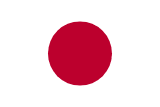
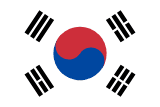
Japan and South Korea are two of Asia's most advanced economies and its great technological rivals — neighbours whose companies dominate global electronics, cars and shipbuilding, and whose histories are entwined in ways both productive and painful.
Japan vs South Korea: the verdict
Japan is the more populous of the two, home to 123.37 million people — about 2.4× the population of South Korea (51.68 million).
On the economy, Japan has the larger nominal GDP at $4.44T. But measured per person, South Korea comes out ahead on GDP per capita ($36,227), a better proxy for average living standards.
Geographically, Japan is the larger country, spanning 377,930 km².
South Korea records the higher Human Development Index (0.937), reflecting stronger combined outcomes in health, education and income (source: UNDP).
Overall the two are evenly matched across these headline metrics — the "winner" depends on which measures matter most to you.
Full breakdown
 Japan
Japan JapanJapan
Context & history
Japan is the larger economy and was the original Asian economic miracle, home to global giants in automobiles, electronics and precision manufacturing. South Korea industrialised a generation later but with astonishing speed, and its conglomerates now lead the world in areas from smartphones and memory chips to shipbuilding and popular culture — the global rise of K-pop and Korean cinema being the soft-power sequel to its industrial success.
The relationship carries historical weight: Japan's colonial rule over Korea in the early 20th century still shapes public sentiment and periodically strains diplomacy and trade. Both are democracies, US allies and among the most rapidly ageing societies on Earth, facing shrinking populations that threaten future growth.
Who would win?
Who would win? Japan leads on total economic size and population; South Korea often matches or beats it on cutting-edge technology and, by some measures, on human development. Both face the same demographic clock — their real contest is against ageing, not just each other.
Government & politics
JapanJapan
Japan is a constitutional monarchy in which the Emperor is defined by the postwar constitution as the 'symbol of the State' with no governing power at all. Executive authority lies with the Prime Minister, chosen by and accountable to the elected House of Representatives, and the Cabinet. Japan's constitution famously renounces war, and the military (the Self-Defense Forces) is under strict civilian control.
South Korea
South Korea is a presidential republic. The directly elected President is both head of state and government and serves a single five-year term with no re-election — a rule designed to prevent the concentration of power seen under earlier authoritarian rule. A Prime Minister, appointed by the President, assists but does not lead the government. The unicameral National Assembly makes the laws, and a powerful Constitutional Court can remove a president through impeachment.
Travel & practical
JapanSome links are affiliate links — we may earn a commission at no cost to you.
Frequently asked questions
Which country has a higher GDP, Japan or South Korea?
Japan has the higher nominal GDP at $4.44T, compared with $1.87T for South Korea (World Bank).
Which country has a larger population, Japan or South Korea?
Japan has the larger population with 123,366,734 people, versus 51,684,564 for South Korea.
Which is larger in area, Japan or South Korea?
Japan is larger, covering 377,930 km² compared with 100,210 km² for South Korea.
Test your geography
Think you know your countries? Put it to the test with a quick game.