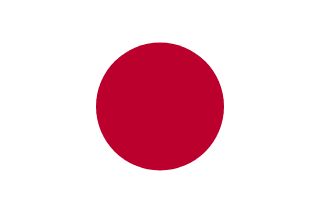
Japan
🇯🇵 Eastern Asia
How Japan ranks globally
About Japan
Japan is a country in Eastern Asia, with Tokyo as its capital. It is home to roughly 123.37 million people, giving a population density of about 326 people per square kilometre. The country covers 377,930 km² of land and has no shared land borders. Its economy is valued at approximately $4.44T in nominal GDP (2025), and it records a Human Development Index of 0.925. The official currency is the Japanese yen (JPY), and the main language is Japanese.
Key indicators
💹 Economy
👥 People
🌍 Quality of Life
GDP over time
How Japan measures up
How Japan is governed
Ceremonial 'symbol of the State'; no governing power.
Holds executive power; leads the Cabinet.
Bicameral — House of Representatives — lower house; House of Councillors — upper house
Who holds the power?
Japan is a constitutional monarchy in which the Emperor is defined by the postwar constitution as the 'symbol of the State' with no governing power at all. Executive authority lies with the Prime Minister, chosen by and accountable to the elected House of Representatives, and the Cabinet. Japan's constitution famously renounces war, and the military (the Self-Defense Forces) is under strict civilian control.
Did you know?
Japan is made up of thousands of islands, though most people live on just four main ones.
It has one of the highest life expectancies of any country.
Greater Tokyo is one of the most populous metropolitan areas on Earth.
Japan is the 12th most populous country in the world, with about 123.37 million people.
By land area it is the 61st-largest country in the world, covering 377,930 km².
It has the world's 4th-largest economy by nominal GDP ($4.44T).
Japan has no land borders with other countries.
Quick quiz — do you know Japan?
What is the capital of Japan?
Travel & practical
Some links are affiliate links — we may earn a commission at no cost to you.
More countries in Asia


Explore more: all countries · all comparisons