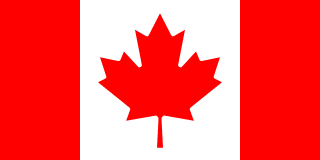
Canada
🇨🇦 North America
How Canada ranks globally
About Canada
Canada is a country in North America, with Ottawa as its capital. It is home to roughly 41.65 million people, giving a population density of about 4 people per square kilometre. The country covers 9,984,670 km² of land and shares land borders with 1 neighbouring country. Its economy is valued at approximately $2.32T in nominal GDP (2025), and it records a Human Development Index of 0.939. The official currency is the Canadian dollar (CAD), and the main languages are English, French.
Key indicators
💹 Economy
👥 People
🌍 Quality of Life
GDP over time
How Canada measures up
How Canada is governed
Ceremonial head of state.
Holds executive power; leads the government.
Bicameral — House of Commons — elected MPs; Senate — appointed
Who holds the power?
Canada is a federal parliamentary democracy and a constitutional monarchy that shares its monarch with the UK; the King is represented domestically by the Governor General, a ceremonial role. Real power lies with the Prime Minister — leader of the party with the most seats in the elected House of Commons — and the Cabinet. Ten provinces hold significant powers, and the Charter of Rights and Freedoms, enforced by an independent Supreme Court, protects fundamental rights.
Did you know?
Canada has the longest coastline of any country in the world.
It is the second-largest country by land area, after Russia.
Canada has two official languages: English and French.
Canada is the 38th most populous country in the world, with about 41.65 million people.
By land area it is the 2nd-largest country in the world, covering 9,984,670 km².
It has the world's 10th-largest economy by nominal GDP ($2.32T).
Canada shares land borders with 1 country.
Quick quiz — do you know Canada?
What is the capital of Canada?
Travel & practical
Some links are affiliate links — we may earn a commission at no cost to you.
Neighbouring countries

More countries in Americas


Explore more: all countries · all comparisons