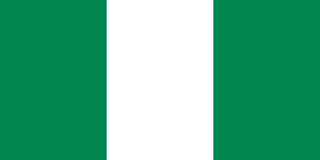
Nigeria
🇳🇬 Western Africa · Federal Republic of Nigeria
How Nigeria ranks globally
About Nigeria
Nigeria (officially Federal Republic of Nigeria) is a country in Western Africa, with Abuja as its capital. It is home to roughly 237.53 million people, giving a population density of about 257 people per square kilometre. The country covers 923,768 km² of land and shares land borders with 4 neighbouring countries. Its economy is valued at approximately $290.79B in nominal GDP (2025), and it records a Human Development Index of 0.560. The official currency is the Nigerian naira (NGN), and the main language is English.
Key indicators
💹 Economy
👥 People
🌍 Quality of Life
GDP over time
How Nigeria measures up
How Nigeria is governed
Head of state and government; holds executive power.
Leads the executive; commander of the armed forces.
Bicameral — House of Representatives — 360 seats; Senate — 109 seats
Who holds the power?
Nigeria is a federal presidential republic modelled on the United States. The President is both head of state and government, directly elected, and shares power with a bicameral National Assembly and an independent judiciary. Its 36 states hold significant powers, and elections balance ethnic and regional interests across a large, diverse federation.
Did you know?
Nigeria is the most populous country in Africa.
Its film industry, 'Nollywood', is one of the largest in the world by output.
More than 500 languages are spoken across the country.
Nigeria is the 6th most populous country in the world, with about 237.53 million people.
It is the most populous country in Africa.
By land area it is the 31st-largest country in the world, covering 923,768 km².
It has the world's 49th-largest economy by nominal GDP ($290.79B).
Quick quiz — do you know Nigeria?
What is the capital of Nigeria?
Travel & practical
Some links are affiliate links — we may earn a commission at no cost to you.
Neighbouring countries


More countries in Africa


Explore more: all countries · all comparisons